Friday, April 10, 2020

Civilian Conservation Corps Records

The Civilian Conservation Corps (CCC) was a New Deal public works project designed to put millions of unemployed young men back to work during the Great Depression.  The program was open to men, aged 18-25, and provided two years of employment with housing and meals included.  The men were required to send a portion of their pay back home.  The men built roads to recreational areas which they also helped restore.  They also provided labor for forest preservation and school construction.  As with military service at that time, the CCC camps were segregated.  FDR, in a 1936 radio address, described the project, putting people to work, and said that the men would be engaged in "healthful, outdoor work on forest, park and soil conservation projects."


 My father, James F.B. Zweighaft, served as the camp physican in the Civilian Conservation Corps (CCC), company 711 in Ely Minnesota, from November 13, 1939 to August 6, 1941.


James F.B.Zweighaft far right

Consider yourself very lucky if you have a relative who served in the CCC's as the personnel files can be  voluminous and are readily available for a copy fee from the National Archives in St. Louis.  Instructions as to how to order CCC records can be found here: https://www.archives.gov/st-louis/civilian-personnel/ccc-holdings-access


James F.B. Zweighaft, right. A New York City native who, in this photo looks perfectly at home in the cold Minnesota winter, he eventually requested a transfer to "any climate warmer than Minnesota".


My father's Official Personnel File (OPF as per the National Archives) contains over 100 pages including his 1939 CCC application, payroll data ("$3200 per annum"), a photocopy of his birth certificate, performance reviews and results of physical examinations in vivid detail, even specifying which teeth were missing.   Documents seemingly unrelated to CCC service may also find their way into these files.  For example my father's OPF contains a series of letters pertaining to a 1935 lawsuit filed against my father for a $48.98 judgment. 


The Family of Szmul Zajnwel Cwajghaft

The Family of Szmul Zajnwel Cwajghaft
May 11, 2019

Szmul Zajnwel Cwajghaft was born in 1841 in Poland (likely Gostynin) to parents Jakob and Estera.  He was the older brother of Simon (b. 1845, Gostynin, Poland). His brother Morris (b. abt. 1860, Poland) was a generation younger.  Szmul probably had at least one more sibling, Lajzar (b. abt. 1849, d. 23 Mar 1881, Krakow).  Szmul married Laia Wasserman (aka Leah, Lia, b. 1842; marriage date unknown) and it appears they had four children together, possibly five or more.  Szmul died in Lublin, Poland in 1927.  It is unknown when Laia died.

It is not known when and why Szmul and Laia moved from Gostynin to the Lublin area, a significant distance to cover in the 19th century.  Gostynin is about 80 miles northwest of Warsaw and Lublin is 110 miles southeast of Warsaw.  Transportation to Lublin was made considerably easier from Warsaw in 1877 and Lublin’s population was expanding rapidly, so a move for increased economic opportunity is likely.  Wikipedia states, “At the beginning of the 19th century new squares, streets and public buildings were built. In 1877 a railway connection to Warsaw and Kovel and Lublin Station were constructed, spurring industrial development. Lublin's population grew from 28,900 in 1873 to 50,150 in 1897 (including 24,000 Jews).”     In any event, the family appears to have been living in Lublin by the time of Sura’s marriage in 1900. 

Simon Zweighaft clearly maintained contact with his older brother, Szmul, as he bequeathed an annuity to him in his 1911 will, ordering this payment:

The sum of Two jundred Rubles per annum, payable in equal semi-annual instalments (sic) on the Frist day of April and October in each year, unto my brother, SAMUEL ZANWEL ZWEIGHAFT, of Nalentchow, near Lublin, Poland, Russia for and during all the term of his natural life, and from and after his decease, I direct that said annuity of Two hundred Rubles per annum shall be likewise paid to his wife, LEAH ZWEIGHAFT, for and during all the term of her natural life.

Simon traveled abroad at least 4 times after arriving in the U.S. in 1867 – 1877, 1891, 1896 and 1910.  It is likely that he visited his brother Szmul on some of these trips.


Szmul and Laia’s Children

Sura Jochweta Cwajghaft
Szmul and Laia’s eldest daughter was Sura Jochweta Cwajghaft, born about 1872 in Gostynin, Poland.  By 1900 when Sura married Mendel Rafjman, she had moved to Lublin.  It is not known whether Sura and Mendel had any children.  Sura died in the Lublin ghetto in January, 1942, likely of disease or starvation.  She was preceded in death by her husband.  While the “Lublin Death Incidents Register” on JewishGen.org lists Sura’s age at the time of her death as 84, that would have meant her birth date was 1858 rather than 1872.  Sura’s 1900 marriage record in the Polish State Archives states she was born in 1872.  As that record is closer to her birth date, it is presumed that 1872 is her correct birth date making her 70 years old, rather than the recorded 84, at the time of her death. 

Just months after Sura died the Lublin ghetto in January 1942, more than 34,000 Jews from the ghetto were sent to their deaths at Nazi extermination camps.

Mendel Cwajghaft
On his 1906 Polish marriage record, Mendel Cwajghaft stated that he was born in Gostynin in 1874. He married Sura Bajla Zylberman (aka Liberman) in Lublin in 1906 and they had at least one son, Gersz Cwajghaft, who was born in 1907 and died in infancy the following year.

Rywka Cwajghaft
Rywka Cwajghaft was born in 1886 in Gostynin.  In 1907 when she was 30, Rywka married Josef Erlich in Lublin.  Rywka and Josef had at least two children – Mojsze Erlich (b. 27 Dec 1907, Lublin) and Jakow Isaak (b. 1909, Lublin).  In 1940, Rywka was 54 and among the 163,000 Jews who were living in the Łodz ghetto.  Conditions were brutally harsh in the ghetto and within two years, according to Łodz hospital records, Rywka was dead of starvation.

Gitla Cwajghaft
There is not yet definitive evidence that Gitla Cwajghaft is the daughter of Szmul Zanjnwel and Laia, but fairly convincing circumstantial evidence exists.  The only other Cwajghafts listed in JRI-Poland Lublin indices are the children and grandchildren of Szmul and Laia.  Gitla, born around 1890, would have been four years younger than Szmul’s youngest documented daughter, Rywka.  Gitla Cwajghaft married Falik Ajnsztajn and gave birth to two children in Lublin in 1912 and 1914, a girl,  Liba Raca Ajnsztajn and a boy, Abraham Jehuda Ajnsztajn. 


Szmul and Laia’s Grandchildren

Gersz Cwajghaft (b. 1907, d. 1908, Lublin) was the son of Mendel Cwajghaft and Sura Bajla Zylbernam.  Gersz died in infancy.

Mojsze Erlich (b. 27 Dec 1907) was the son of Josef Erlich and Rywka Cwajgchaft.  There is evidence that Mojsze Erlich survived the Holocaust.  The JewishGen collection, “Jewish Holocaust Register of survivors printed in Pinkas HaNitzolim I & II” lists a Mojsze Erlich born to Rywka.  A second source is the JewishGen database, “The 1948 Warsaw Survivors List”.  In that index entry, Mojsze Erhlich (note variant spelling of surname) is listed as living at Zamenjofa 17, Lublin in 1939 and in Gauting, Germany in 1948. This index entry lists his parents as Josef Erhlich and Rywka Cwajghaft. 

Gauting, Germany was the location of a WWII displaced persons camp, housed in a former tuberculosis hospital.

No further information about Moysze Erlich’s fate has yet been discovered.

Jakow Isaak Erlich (b. 1909, Lublin) was the younger son of Josef Erlich and Rywka Cwajghaft.  His fate during the Holocaust is unknown.

Liba Raca Ajnsztajn (b. 1912, Lublin) was the first-born child of Falik Ajnsztajz and Gitla Cwajghaft.  Her fate during the Holocaust is unknown.

Abraham Jehuda Ajnsztajn (b. 1914, Lublin) was the second-born child of Falik Ajnsztajz and Gitla Cwajghaft. His fate during the Holocaust is unknown.


Saturday, December 29, 2018

Anna Olette Anundsen's Emigration and Birth Records at the Norwegian Digital Archives


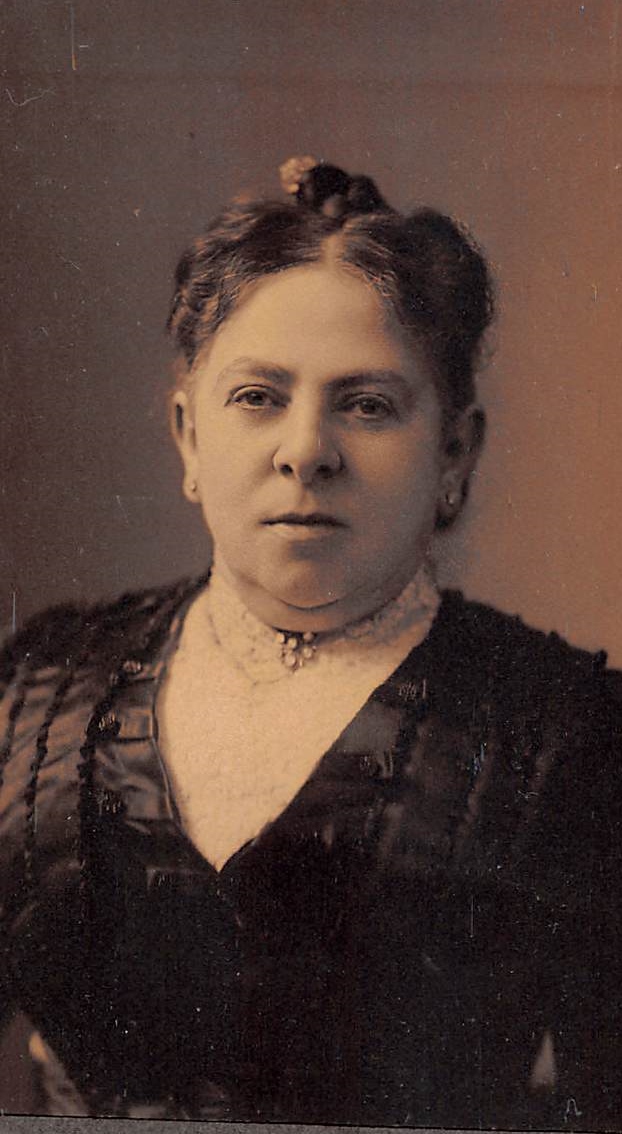
Anna Olette Anundsen, abt. 1900, in Brooklyn
Anna Olette with her family in Norway, from left:
 Ingeborg, Ingeborg (mother), Gunda, Lovise, Anund (father), Anna Olette, Anna Oline


Three of my four grandparents were immigrants, so as my genealogy research has progressed back into the 19th century, by necessity I've become somewhat acquainted with reviewing records in Norwegian, Swedish and Polish.  

But navigating foreign national archives online can be quite challenging with a steep learning curve.   Even though English translations may be provided, frequently they are not available consistently throughout a foreign web site, so that clicking on a link may land you on a non-English page.  Also, researching ancestors from several different foreign countries means that, even though you may become comfortable navigating a foreign-based web site for one ancestor, it may be months or even years before you return to that web site, necessitating re-education as to how to find the records needed.

Emigration Records

So it was with some reluctance and trepidation that I returned to a post I started six years ago about finding my Norwegian grandmother's emigration and parish records in the Norwegian Digital Archives.  

Much to my surprise, one of the two links saved years ago for the emigration record is still valid.  One click and I'm at the record:

http://digitalarkivet.arkivverket.no/gen/vis/8/pe00000000512314


  As I already had my grandmother's passenger ship record showing her arrival in the U.S. in 1897 (see image below), the Norwegian Digital Archives record is a very nice complement, showing her departure from Norway.


21-year-old Anna Anundsen arriving in New York with $2.50 to visit her uncle Andreas Roberg


Parish Records

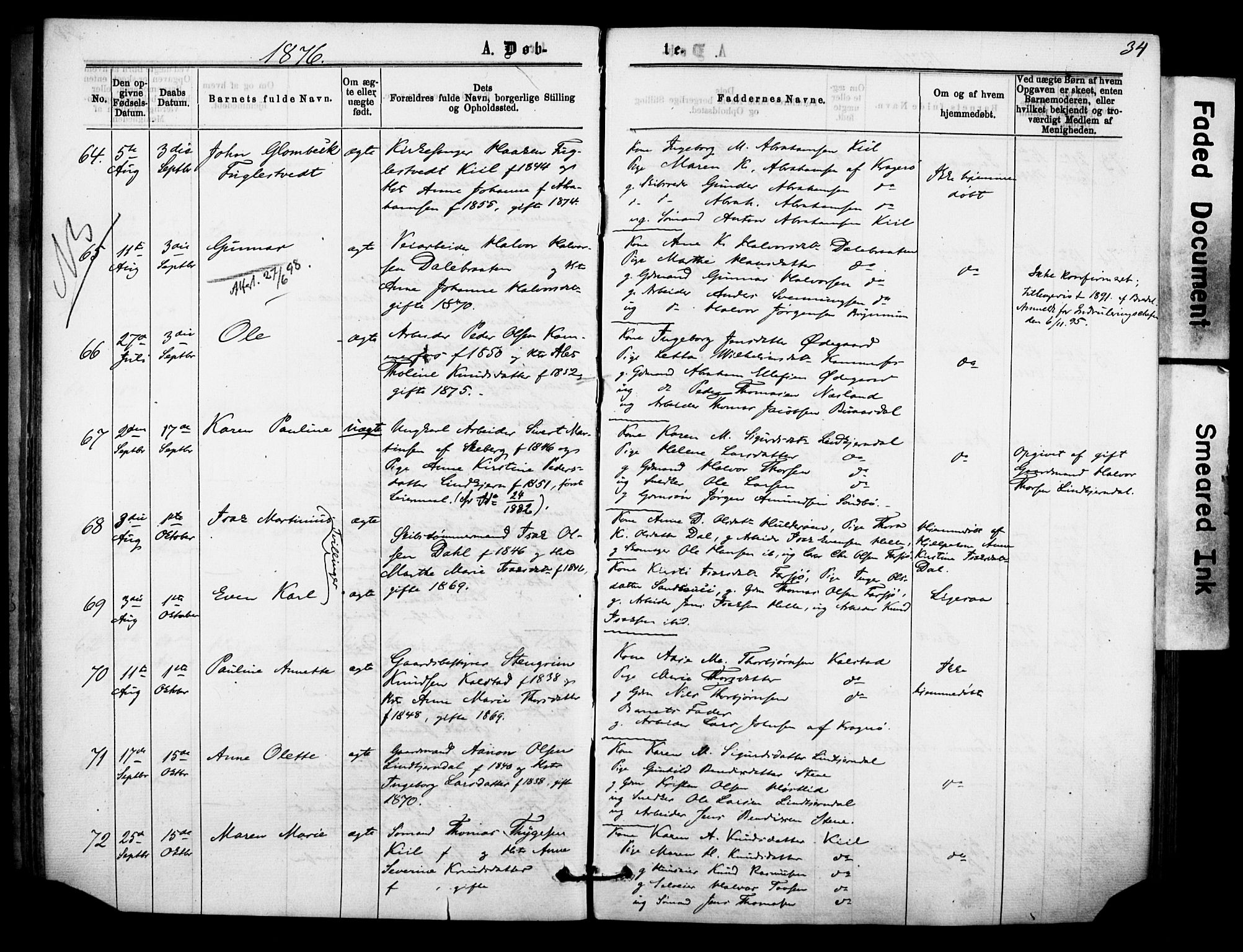
The path I followed years ago to the parish records no longer worked, but it was pretty straightforward to locate Anna Olette's birth record with the information I had saved (county, parish, birth year, page number).  Once I found the record, I was having trouble downloading it without logging in, but a quick post to the Norwegian Genealogy Facebook page resolved that problem (just right-click and 'save image as...').  And even better, another FB user in that group explained how to find the permanent link to the birth record.  Once on the page with the birth record, click on the icon with the three vertical dots on the far right ('References').  The 'Permanent image ID', 'Quick link' and 'Permanent image-link' information will be listed.  Here is the permanent image-link for Anna Olette's birth record:

http://urn.digitalarkivet.no/URN:NBN:no-a1450-kb20060629040447.jpg

Entry 71, 2nd from bottom is for Anna Olette


And here is how I navigated to find the image initially:

1.  Go to  https://www.digitalarkivet.no/en/

2.  Go to Explore Digitised Archive Material, then Church Books, then Browse Norwegian Church Books

3.  In the left panel, fill out the fields in 'Search for church books' and press return:
  • For County, select Telemark
  • For Parish, select Sannidal
  • For Church book type, select Parish register (official)
  • For From year and To year, enter 1876
4.  Select the first result:   Sannidal kirkebøker and then click on First page

5.  At the top of the image at the front of the book, on the right, you'll see 'Page' followed by 'mangler' which translates to 'missing' as the first two pages of the book are not numbered.  Either page forward to page 34 or simply enter '34' in the box labelled 'mangler'. Anne Olette's entry,  with a birth date of September 17th,  is the second from the bottom of the page.


Anna and Axel Strom

Tuesday, April 24, 2018

Beyond the Basics - 19th Century Business Trade Cards at the Historical Society of Pennsylvania

How odd it seems to me that some amateur genealogists declare that their family's genealogy is 'done'.   While birth, marriage and death certificates as well as records related to military service, land transactions and immigration all document important events and relationships in an individual's life,  there is so much more to the family story.  Collections maintained by historical societies are some of my favorite places to search when looking for unusual documents which add color, details and dimension to an ancestor's life story. 

The special collections library and archives of the Historical Society of Pennsylvania (www.hsp.org) should be high on the list of repositories to visit for genealogists researching Pennsylvania ancestors.


With 21 million manuscripts and graphic items in their collections on Locust Street in Philadelphia, finding items related to your Pennsylvania ancestor can seem like searching for the proverbial needle in a haystack.  However, there is ample assistance on-site for help in starting the search, as well as online catalogs to explore prior to your arrival.

I visited the Historical Society of Pennsylvania (HSP) in April 2018.  Upon entering, I told the reference librarian that my great grandfather, Simon Zweighaft (b. 1845, Gostynin, Poland) and his wife, Sophia Hirschberg (b. 1844, Pilica, Poland) were Jewish immigrants from Poland, arriving in Philadelphia around 1867.  Simon was a real estate speculator (another blog post needed for that), but on this visit to HSP I was primarily interested in learning what I could about his other business venture, his jewelry business.  The evidence of his business dealings I had to date was pretty meager:

1) I knew from an 1875 Philadelphia city directory that Simon identified himself as a jeweler. 


2) The 1880 U.S. federal census adds the detail that the couple had a physical shop, with both Simon and Sophia's occupation listed as 'jewelry store'. 


 3) In 1883, Simon and a collaborator were issued patent #280345 for a "jeweler's show-window". 


The text of the patent states that the patent owners "have invented a certain new and useful improvement to prevent burglars from smashing or breaking show-windows of stores or other places where valuable articles are on exhibition and stealing the contents or part thereof before the occupants of the place can prevent it."

4) The final piece of evidence I had documenting Simon's career in the jewelry business was a mention on page 22 of the August 9, 1891 issue of the New York Herald.  The social column "Crowds in the Catskills" identified Simon as a 'diamond broker'.  


The HSP reference librarian suggested that I start my search looking for the surname, street address and 'jeweler' in the old-school physical index to the manuscript collection, 3x5 index cards in the wooden card catalog files (labelled PC1).  While I came up empty on the first two searches, the 3rd for 'jeweler' yielded an interesting find.  The index card pointed me to the business trade card collection where there were four cards for S. Hirschberg on North 8th Street, the address of the Zweighaft home.  


These cards were fascinating to me for several reasons:  
  • this is the first time I've seen any sort of a description of the physical shop plus it confirms that the shop was at the same address as the family home
  • Sophia was running the shop (just as she had stated on the 1880 census, although until I saw these cards,  I hadn't really considered her as the principal before) 
  • Sophia used her maiden name on the cards.  I have no idea why...more research needed!
  • and last but not least, the cards themselves are truly lovely, with beautiful artwork and still-vibrant colors despite being around 140 years old

I hope this discovery of mine will inspire others to seek out unusual collections in archives, libraries and other repositories located in the places where your ancestors conducted business, attended school and joined religious and community organizations.   You too may be richly rewarded!


Sophia Hirschberg Zweighaft

Simon Zweighaft


Monday, December 12, 2016

Finding Theresa Helburn: Strategies for Finding Those Elusive Passenger Ship Records

Frequently it can be difficult to find passenger ship records for people who emigrated to the U.S. in the 19th century.  Name misspellings on the manifest or a misspelled transcription of the manifest passenger name make discovery less likely when searching using a name index, e.g., with an Ancestry.com passenger ship record search. You can bypass the use of an index by browsing a record collection, but immigrants often specified a variety of dates for their arrival to the U.S. making browsing ship manifests by dates a very time-consuming effort.  Also, many passenger lists from this time period have been lost.  For example, most of the 19th century passenger lists of ships departing from Bremen were destroyed due to lack of space in the Bremen Archives.

But we continue to search, because finding these ship records can be positively riveting, even for those of us who have discovered and saved thousands of records for our ancestors.  The manifest may show not only the family group but sometimes the place of birth as well as final destination.  Something about seeing your ancestor's name on a ship manifest brings the emigrant's story to life in a palpable way that few other record types do.

After decades of research, the only passenger ship manifest I had found to date for my nine ancestors who emigrated to New York in the 1800's was the one for my 21-year-old Norwegian grandmother, Anna Anundsen (aka Anna Olette Olsen).  She arrived from Kragerø, Norway in 1897 to visit her uncle Andreas Roberg (A. Roberg) in Brooklyn. (see line 1).  My grandmother's record had eluded me as Anna Olette variously used the surname Olsen, Anundsen, Olavsen or Anundsdatter.  The transcriber of the passenger manifest below recorded her name as Anne Amundsen.


 Anna Olette left behind her parents and four sisters in Norway.  We believe that she intended to return, but she met my Swedish grandfather, Axel Strom, in New York. They fell in love, married and raised their seven children in the Bay Ridge section of Brooklyn.

Eluding me still were the passenger ship records for eight additional ancestors arriving in the 19th century:
  • my Swedish grandfather, Axel Strom (b. Hjalmar Axel Oscar Ström, 1 Jan 1867, Stockholm, Sweden)
  • my Jewish great grandfather, Simon Zweighaft (b. 15 Dec 1845, Gostynin, Poland), his wife Sofia Hirschberg (b. Zysia Hirszberg, abt. 1844, Pilica, Poland) and their infant son Bernard Zweighaft (b. 23 Dec 1865, Pilica, Poland)
  • my Jewish great grandfather Fabian Sachs Kaliske (b. Fabian Sax, 15 Mar 1833, Kalisz, Poland)
  • my Jewish great grandmother Theresa Helburn (b. Therese Hellborn, 14 Aug 1855, Dettelbach, Germany) and her parents, Isaac Helburn (b. Isaac Hellborn, 1813, Germany) and his wife, Nanette Feldheim (b. Brünette Feldheim, 9 Aug 1819, Dettelbach, Germany)
A couple of weeks ago I finally had the opportunity to spend several hours with the genealogy and local history collections at the Milstein Division of the NY Public Library (NYPL) in Manhattan.  Frustrated when my research turned up nothing, I used the last bit of time strolling the Milstein Division stacks.  One set of books I've looked at many times before is Germans to America. (Ira a. Glazier and P. William Filby, editors, Germans to America (Wilmington: Scholarly Resources, Inc., 1991)  But this time, rather than focusing on the name index, I browsed the ship arrivals by date, honing in on the emigration date of March 1, 1864.  I had recently seen this date of emigration stated on an 1899 passport application made by Theresa Helburn's older brother, Julius Helburn.


It only took a few minutes browsing the ship arrivals by date in Germans to America, and there on page 176 was my great great grandmother and her six children:

SHIP:   BREMEN

FROM:  BREMEN
TO:       NEW YORK
ARRIVED: 01 MARCH 1864

                                             AGE
HALLEBON, NANETTE           44
    EMILIE                              17
    JULIUS                              14
    BERTHA                              9
    THERESA                            8
    HUGO                                  5
    SELMA                                6


Seeing the entry with the spelling of the family name as HALLEBON rather than HELBURN or HELLBORN makes it clear why I never found this record on Ancestry.com using a name index search.  The Ancestry.com index is only as good as the spelling used when the index was created. Going back to Ancestry.com and browsing the ship passenger records using the exact date and the ship name of Bremen turned up the original manifest:


Among our family papers was a copy of a handwritten record of Helburn family births.  This section was clearly written by my great great grandmother Nanette Feldheim Helburn.  She listed her six living childrens' names along with two sons who had died.  (Youngest son Hugo's name is under the dark strip which was probably a piece of tape.)   A perfect match to the ship manifest.


Nine years after arriving in the U.S. at age eight, my great grandmother Theresa Helburn married 40-year-old Fabian Sachs Kaliske, a widower. Theresa gave birth to five children:
    • Martin Saxe (b. Martin Kaliske, 28 Aug 1874, N.Y.)
    • Blanche Sachs (b. Flora Kaliske, 15 Mar 1876, N.Y.)
    • Julian Terris Saxe (b. Julian Terris Kaliske, 17 Jul 1877, N.Y.)
    • Arthur Cutting Saxe (b. Arthur Cutting Kaliske, 28 Feb 1879, N.Y.)
    • Belle Saxe (b. Bella Kaliske, 14 Jul 1882, N.Y.)

Theresa lived to be 91.  Here she is presiding over a 'Family Dinner at the St. Moritz Hotel in New York' as depicted by my father, James Fabian Bernard Zweighaft in 1944.


So keep looking for those passenger ship records!  You will eventually be rewarded.  Some strategies to use while searching:  
  • Review stated emigration dates and ships on multiple records for not only your ancestor, but also collateral relatives - parents, aunts, uncles, cousins
  • Browse book and digital collections by ship arrival dates in addition to searching using an index
  • Browse ship manifests for ports of departure as well as arrival ports
  • If it's unclear when and where your ancestor's ship arrived, review passenger ship arrival statements in the local newspapers for several likely inbound ports.  For example, if you are not certain what into what port your New York ancestor arrived, search local newspapers in New York, Boston, Philadelphia and Baltimore for ship arrival notices
  • Look for unusual spelling of the family names.  Sometimes searching on a given name using wildcards for the surname may be the breakthrough if the surname is badly mangled.